Most runners I know aren't held back by talent, but by the same few mistakes, year after year. I've made most of them. So this season I'm training the way I run projects at work: a plan, a quick check-in every morning, a look back every Sunday, and a list of everything that went wrong.
Free Excel plan in 2 minutes · No sign-up needed

“Slow runs are a waste.” “No pain, no gain.” I test them on myself and check the studies.
Plan builder, zone 2, race predictor, fuel and more. Each one shows its formula and sources.
My real numbers and retros, bad weeks included.
Thirteen years of them, so you can skip a few.
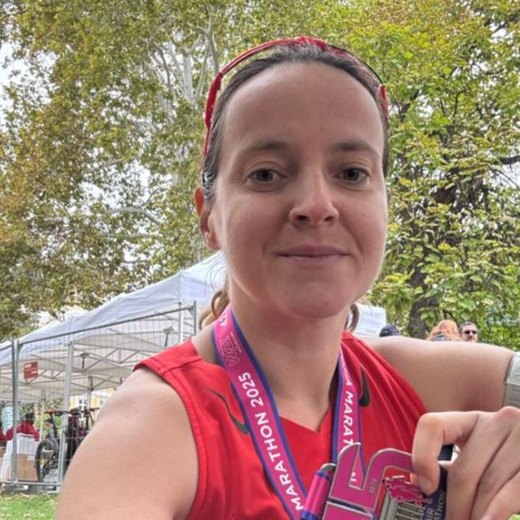
I started running with no sports background at all. Thirteen years on, I've done four road marathons (one of them on the Olympic course in Paris) and four mountain ultras, including a 100k I actually finished. For most of those years I trained in bursts. No plan, too fast, too far, then a few months off and a painful restart. Things only changed when I got a coach, and when I started treating training the way I treat projects at work.
Why read me? I'm not an elite. I'm the runner who already made the mistakes, so maybe you don't have to. I like data and I like drawing things, so I try to show how training works, not just tell you what to do.
My first marathon of 2027 is Tel Aviv in February, then Rome in March. Come along if you like.
My fastest 5K every year, straight from Strava. For nine years my relationship with running was on and off: no plan, easy days too fast, long runs too long, then weeks or months of nothing and a hard restart. My 5K barely moved. Then I started working with a coach, and on top of that I began running my training like a project: a plan, easy runs that were really easy, one key session a week, a Sunday retro. In 2025 it finally dropped, to 23:48.
Fastest 5K per calendar year, 2015–2025. Source: my Strava.
At work, nobody ships a big project on motivation alone. There's a plan, a quick daily check-in, a look back at the end of each week, and a list of what went wrong so it doesn't happen twice. I do the same with running. In plain words:
The free Excel plan has all four built in. Build yours →
Answer 7 questions and get an Excel plan with your paces, a dashboard, a morning check-in, Sunday retros, risks and milestones. For 5K up to the marathon.
Race predictions, training paces, heart-rate zones, VO2max and a few more. No sign-up. You type your numbers in and get your targets.
Prefer paper? My one-page PDF guides to easy pace, fuel, electrolytes and race day are on the tools page. Get the PDFs →
My marathon season, tracked like a work project. Every Sunday I post the numbers and what went wrong that week.
See this week's statusLike the free plan, but it reads your runs, sleep and heart rate, and changes the week when life gets in the way.
Join the founding list
Honestly? Because sloths are cool. But the more I read about them, the more they looked like a decent role model:
So yes, slow on purpose. That's more or less the whole idea.
Everything goes on Instagram first and ends up here later. If you want to follow along, that's the place.
What are you training for? Tell me on Instagram. I read every comment.
On Strava you see every run as it happens, the easy ones included.
Where should I send it?
I only use your email to send you the guide and my emails. No spam, never sold.